
The everyday genius of the Rolex oyster bracelet.
The bracelet that never quits.
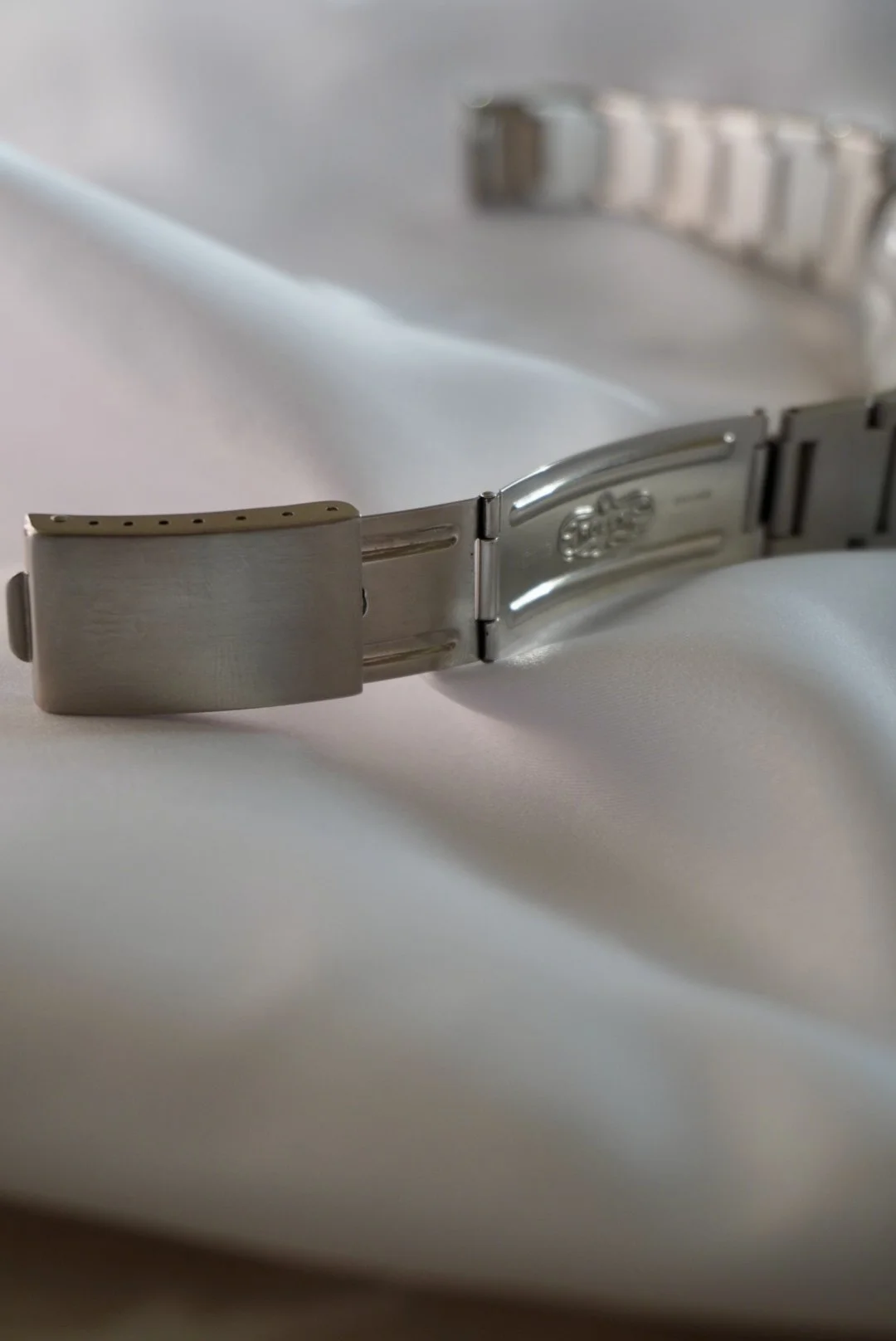
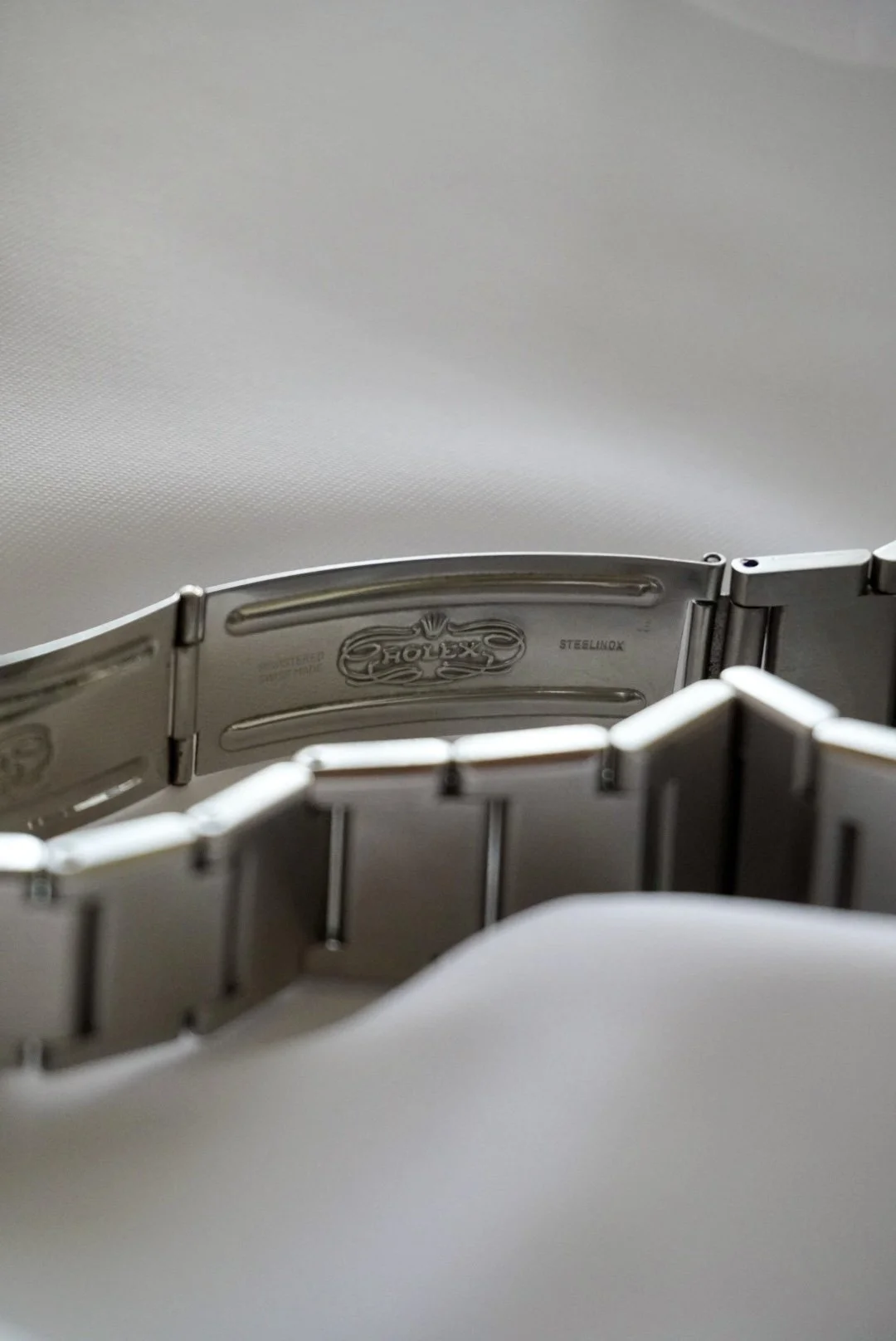
The oyster bracelet was engineered with the smoothness of a drawer in a minimalist Scandinavian kitchen. Clear, frictionless, utilitarian and slightly smug about its craftsmanship, in many ways it is the story of Rolex itself, a blend of evolving engineering and the pursuit of durability in the golden age of tool watches. From the lightweight Swiss rivet bracelets crafted by Gay Frères in the 1950s to the sturdier folded and solid‑link designs that followed, each generation reflected Rolex’s ongoing effort to refine comfort and style. These bracelets weren’t merely accessories; they were integral components of early Submariners, GMT‑Masters, Explorers, shaping how these watches were worn and experienced. Today, collectors prize them not only for their craftsmanship but also for the authenticity they bring to vintage references. Understanding their construction and quirks is essential to appreciating the full heritage of Rolex’s most iconic sports models. The bracelet on any Rolex is the part of the watch that tells you whether the watch means business, leisure or a bit of both.
If my knowledge serves me correctly, Rolex adapted to changes in market and regulations over the mid-20th century. From the delicate Swiss rivet construction produced by the famed Guy Ferres with fixed or in some cases expandable links, to the more robust and in my opinion highly flexible links that were produced up until 1978, both variations are intentionally lightweight, giving them a distinct cross section and a hollow structure, though they are prone to stretch and clasp fatigue over time.
Despite these limitations, they were classified as premium products at the time and their tactile charm remains unmatched by modern day standards.
As Rolex expanded into international markets, import duties in the United States and UK and Mexico made Swiss-made bracelets expensive to ship. To combat this, Rolex commissioned US-based manufacturer C&I. These American bracelets were different in several ways:
· Thinner steel
· Hollow rivets with fixed/ expandable links
· Unmarked end links
· Looser fit.
While not as refined as a Swiss-made bracelet, in my opinion, a US made bracelet is historically important and remain highly-collectable, especially when paired with a US delivered watch. Whether you had a Swiss or a US bracelet, both variations have spring loaded expandable links, designed to improve comfort during wrist swelling. Infact, if you’ve ever tried to resize a bracelet on a hot day, you’ll appreciate the quiet genius of rivet bracelet. It’s the horological equivalent of loosening your belt after dinner, except far more elegant and socially acceptable. These links were the first components to fail, and Rolex discontinued them by the late 1970s. Surviving examples are now rare and often fragile, making them a niche but fascinating part of bracelet history.
The later bracelet designs were created to be fully compatible with both new releases and earlier Rolex models, making them easy retrofit options. Many enthusiasts also consider the Folded and Solid Link bracelets from this era to be more robust and comfortable than the earlier Rivet Link versions. Purist vintage collectors remain passionate about matching their rare Rolex pieces with the exact bracelet style from the watch’s original period.
In the grand tapestry of Rolex bracelet history, one truth becomes clear: Rolex has never treated the bracelet as an afterthought. It’s always been a quiet co‑conspirator in the brand’s pursuit of excellence.
And speaking of scene‑stealers, there’s a certain model that embodies this entire journey with a touch of rebellious elegance, the Rolex Oysterquartz. Unapologetically 1970s and engineered with the kind of precision that makes even makes mechanical purists raise an appreciative eyebrow.
At FlutedLondon, we are fortunate enough to have one of these rare creatures in stock. It’s the perfect example of Rolex daring to be different while still delivering the craftsmanship collectors adore. If the bracelets in this article are the supporting cast, the Oysterquartz is the charismatic lead who walks on set and instantly owns the room and starts that conversation.
So, whether you’re here for the brief history lesson, the engineering or simply the pleasure of admiring beautifully made things, remember: some bracelets hold a watch, but the Oysterquartz holds an era.
And if you’d like that era on your wrist, well… I happen to know just the place:)
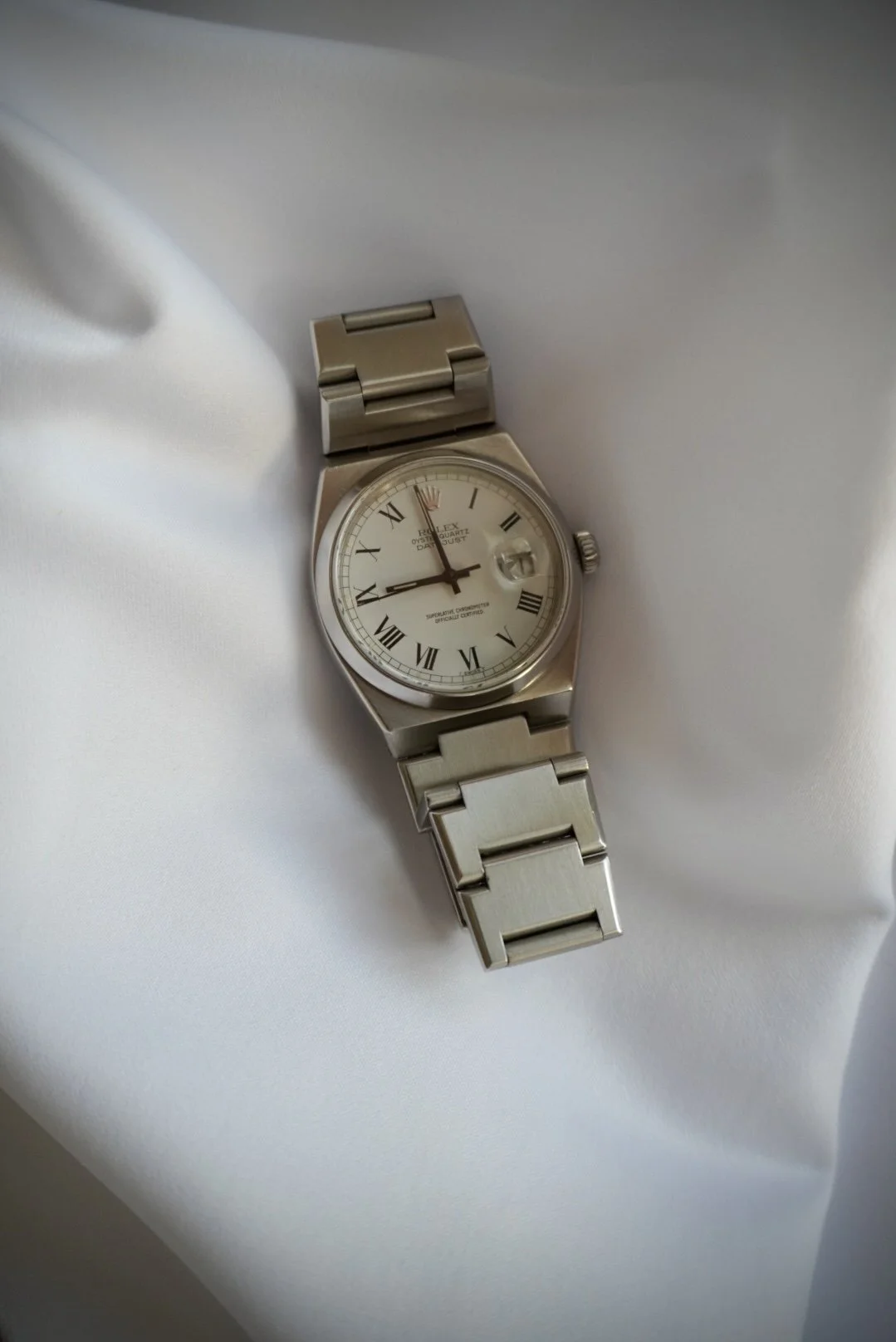
Watch: Ref 17000 ‘Buckley’ dial.
