
No box, No paper, No problem…
Box and Papers- Cherry on the top, not the sundae.
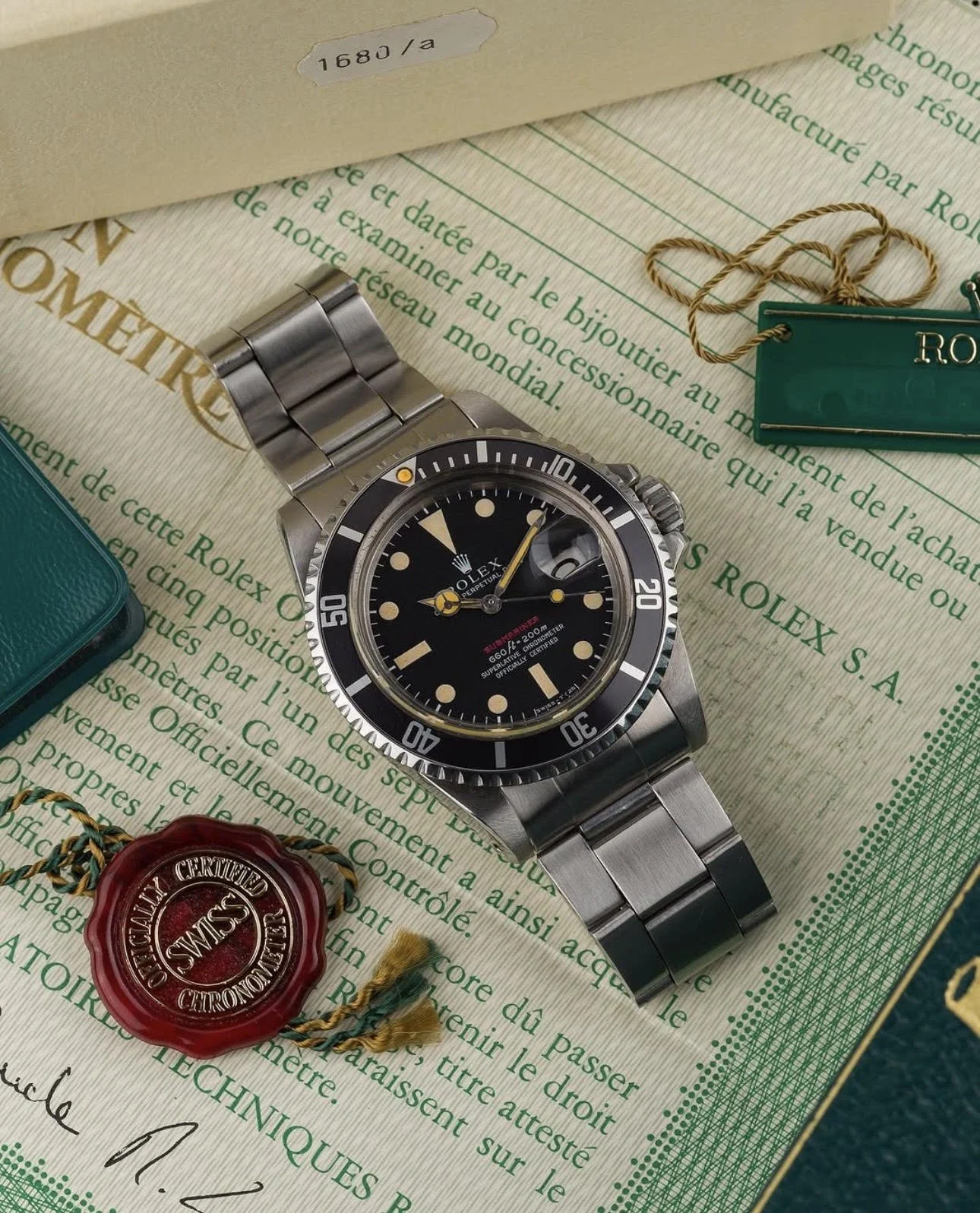
Credit: @Vintagewatchcollective
For years collectors around the world have treated box and papers like holy relics, as if a cardboard cube and some flimsy booklets hold the soul of a vintage timepiece. It has become a kind of collector’s superstition and a ritualistic checkbox that often overshadows what truly matters: the watch itself. Yet when we look closer, this obsession reveals more about market psychology than it does about authenticity or value. The box and papers hysteria is a modern collector’s superstition, a mix of FOMO and market folklore.
In my opinion, it is almost like insisting on keeping the dustbag for your handbag, not because you use it but because it signals that you are “doing it properly.”
The survival bias that nobody talks about.
Let’s start with the obvious. A 1603 may have lived decades of real life but its boxes haven’t.
This means that expecting a 1970s Datejust to still have its original cardboard is like expecting a 1970’s owner to have kept every receipt from every supermarket. People moved homes and decluttered and boxes were thrown away because they were never meant to be heirlooms. The fact that some survived is not evidence of care, it is evidence of chance.
So why do we treat accidental survival as a marker of value?
According to the American Psychological Association (2014), the completeness theory describes our tendency to view things that are ‘incomplete’ as less appealing, smaller, or somehow “lesser” than complete ones, even when their actual substance is identical. Research shows that people prefer buying items that look complete and this preference can influence everything from perceived value to consumption behaviour.
In other words, our brains associate completeness with desirability. This bias operates automatically, shaping choices even when the primary attributes of the item are the same.
Furthermore, the presence of a watch has no causal relationship with the condition of the watch. When a watch comes with a full set, collectors unconsciously assume the watch itself must be in better condition.
The real question is whether traditional collectors will adapt or cling onto a myth that benefits sellers more than buyers.
To conclude, although I stand firmly against the hysteria, I’ll admit something openly, I adore a good full set myself. There’s a certain romance to it, the original box, the stamped papers and the little accessories that travelled through time alongside the watch. It’s rare, it’s charming and yes, it makes my life far more complicated as a purveyor:) . But that’s part of the joy. You should not be chasing full sets because they define value; you should chase them because they are delightful when they appear.
Box and papers are the cherry on top, not the sundae.
